

In the ever-evolving landscape of optical and sunglass manufacturing, one material has consistently risen above others for its exceptional blend of performance, comfort, and durability: titanium. As discerning consumers and professional buyers increasingly seek eyewear that combines longevity with daily wearability, titanium eyewear frames have transitioned from a niche luxury to an industry standard for premium products. This comprehensive guide explores the intricate world of titanium frame production, delving deep into the advanced CNC machiningprocesses that enable precision manufacturing, the comprehensive nature of custom titanium eyewear production, the inherent benefits of being lightweight & hypoallergenic, and finally, how to identify and partner with a world-class titanium optical frames manufacturer. Whether you are a brand looking to develop a new collection, a retailer sourcing premium inventory, or an industry professional seeking to deepen your technical knowledge, this 2500-word exploration provides the essential insights needed to navigate this sophisticated sector.
Chapter 1: Understanding Titanium Eyewear Frames - More Than Just a Material
Titanium eyewear frames represent the pinnacle of material science applied to personal accessories. Not all titanium is created equal, and the optical industry utilizes specific grades and alloys to achieve desired characteristics.
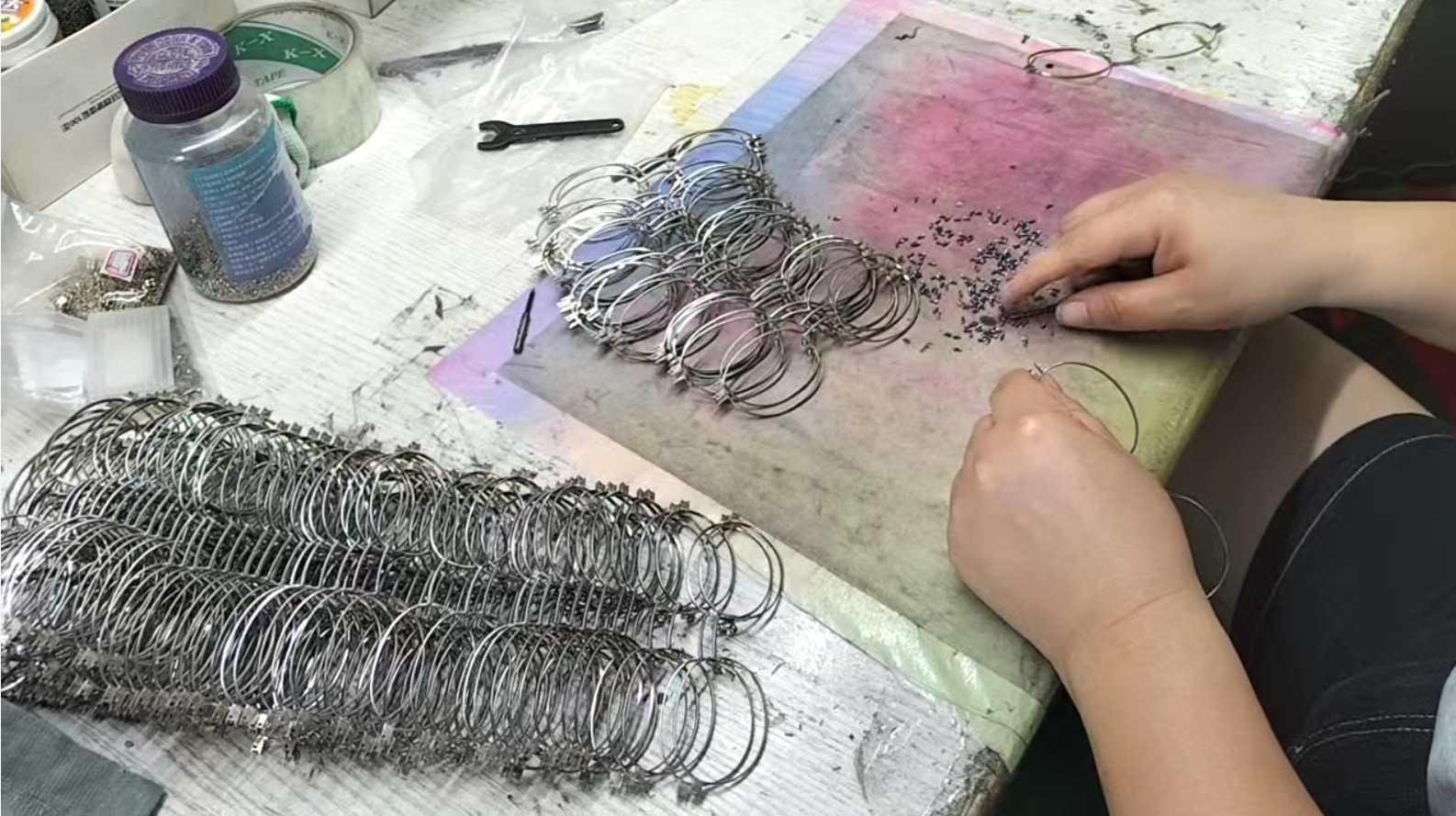
The Types of Titanium in Eyewear:
• Pure Titanium (Grade 5, Ti-6Al-4V): The most common grade, known for its excellent strength, lightweight nature, and superior corrosion resistance. It offers a perfect balance for most frame designs.
• Beta Titanium: This is not a grade but a state of the metal achieved through alloying and heat treatment. Beta titanium frames are renowned for their exceptional flexibility, "memory" properties (returning to shape after bending), and hypoallergenic qualities, making them ideal for durable yet comfortable temple tips and flexible hinges.
• Memory Titanium: A specific alloy (often Titanium-Nickel, though nickel-free versions exist) that can be deformed and then returned to its original shape with the application of heat, allowing for incredible durability and user-adjustability.
The journey of a titanium optical frames manufacturer begins with sourcing these specific alloys in forms suitable for eyewear: sheets, rods, and wires. The choice of alloy impacts everything from the machining process to the final finish and performance of the frame. A reputable manufacturer understands these subtleties, selecting material not just based on cost, but on the functional and aesthetic requirements of the final design. This foundational knowledge is what separates a simple metalworking shop from a true specialist in titanium eyewear frames.
Chapter 2: The Heart of Precision - CNC Machining in Frame Manufacturing
At the core of modern, high-quality titanium frame production lies CNC (Computer Numerical Control) machining. This subtractive manufacturing process is what allows for the incredible precision, complex geometries, and consistent quality demanded by today's market.
Why CNC Machining is Indispensable:
1. Unmatched Precision and Consistency: A titanium optical frames manufacturer employs multi-axis CNC mills and lathes to cut frames and components from solid blocks or sheets of titanium with tolerances as tight as a few microns. This ensures that every hinge aligns perfectly, every lens groove is uniform, and every pair in a production run is identical to the sample. For brands, this means zero defect surprises and guaranteed product integrity.
2. Complex Design Realization: Intricate filigree work, hidden hinges, integrated spring mechanisms, and sophisticated bevelling—all hallmarks of high-end design—are only possible with the programmable tool paths of CNC technology. It transforms digital CAD (Computer-Aided Design) files into physical art with reliability that handcrafting cannot match at scale.
3. Efficiency in Prototyping and Production: The same digital file used for the initial prototype can be used for mass production. This streamlines the development cycle in custom titanium eyewear production, allowing for rapid iteration from design to sample to final product. It also enables efficient material usage, minimizing waste of valuable titanium.
The process typically involves rough machining to form the basic shape, followed by a series of finer finishing operations. A skilled titanium optical frames manufacturer will have a deep understanding of tool selection, cutting speeds, and coolants specific to titanium to prevent work hardening and ensure a flawless surface ready for the next stage: finishing and assembly. CNC machining is not just a step in the process; it is the technological backbone that makes contemporary, reliable, and beautiful titanium eyewear frames a reality.
Chapter 3: The Collaborative Journey of Custom Titanium Eyewear Production
For brands and designers, off-the-shelf frames are often insufficient. The desire for unique identity, specific functional features, or tailored market positioning drives the need for custom titanium eyewear production. This is a collaborative, multi-stage partnership between the brand's creative vision and the manufacturer's technical expertise.
The Stages of a Custom Project:
1. Concept and Design Collaboration: It begins with an idea—sketches, mood boards, or a 3D model. An experienced titanium optical frames manufacturer will have a technical design team to review the concept for manufacturability, suggesting adjustments to enhance durability, wearer comfort, or production efficiency without compromising the design intent.
2. Engineering and Prototyping: Once the design is finalized in CAD, the first physical samples are created via CNC machining. This stage is crucial for evaluating fit, feel, balance, and aesthetics. Multiple prototype iterations may be produced to perfect hinge tension, temple curvature, and nose pad placement.
3. Material and Finish Selection: Customization extends to material specifics (choosing between pure or beta titanium for different components) and surface finishes. The manufacturer guides the client through options like:
Polishing: For a high-luster, reflective shine.
Bead Blasting/Sandblasting: For a consistent, sophisticated matte texture.
Anodizing: An electrochemical process that creates vibrant, durable colors without paint.
Physical Vapor Deposition (PVD): A high-tech coating process that applies extremely thin, hard, and decorative layers (e.g., gold, rose gold, gunmetal) with exceptional scratch resistance.
4. Production and Quality Assurance: After sample approval, full-scale production begins. A professional manufacturer will implement rigorous Quality Control (QC) at every stage—incoming material inspection, in-process checks during machining and assembly, and final inspection of the completed frame. Tests often include salt spray testing for corrosion resistance, repeated hinge open/close cycles, and nickel-leach testing to verify hypoallergenic claims.
5. Logistics and Support: The final stage encompasses branding (laser engraving logos), packaging, and coordinated export logistics. A true partner-manufacturer provides support throughout the product lifecycle.
This end-to-end custom titanium eyewear production service allows brands to own unique designs, build intellectual property, and command higher market value, all supported by the technical prowess of a specialized manufacturer.