

In the world of eyewear, the final product—the elegant frame resting on one's face—is the visible culmination of a deeply technical and foundational process: mold making. Before any acetate sheet is pressed or any TR90 pellet is injected, the creation of a precise, durable, and often complex mold dictates the design freedom, quality, and manufacturing efficiency of the entire collection. This critical phase, encompassing Eyewear mold manufacturing, Optical frame mold design, Acetate eyewear mold production, Custom eyewear mold development, and TR90 frame mold fabrication, is the unsung engineering hero of the industry. This article provides a detailed exploration of this specialized field, illuminating how molds shape not just plastic and resin, but the very boundaries of eyewear fashion and function.
Part 1: The Foundational Blueprint - Optical Frame Mold Design
The journey of a mold begins not on the workshop floor of a toolmaker, but in the digital realm of design and engineering. Optical frame mold design is a sophisticated discipline that translates a 3D CAD model of a spectacle frame into a functional tool capable of mass-producing identical parts.
This process is far more complex than simply creating a negative cavity of the frame. Designers must account for:
• Material Shrinkage: Different materials contract at different rates as they cool. Acetate and TR90 have distinct shrinkage factors (typically 0.3-0.8%). The mold cavity must be deliberately oversized to compensate, ensuring the final part dimensions match the original design spec after cooling.
• Draft Angles: All vertical faces in the design must incorporate a slight taper (draft). This allows the solidified frame component to be ejected from the mold cleanly without scratching or sticking. Insufficient draft is a primary cause of production defects and mold damage.
• Parting Lines: The designer must determine the optimal plane where the two halves of the mold will meet. The goal is to place this parting line where it will be least visible on the final product, often following the natural contour of the frame's edge.
• Gating and Venting: The design must include channels (gates) for molten material to flow into the cavity and escape routes (vents) for air to exit. The gate location impacts material flow and can affect the structural integrity and surface finish of the frame front or temple.
• Mold Flow Analysis: Advanced software simulates how the molten material will fill the cavity, identifying potential issues like air traps, weld lines (where two flow fronts meet, creating a potential weak point), and uneven cooling. This virtual prototyping is essential for Custom eyewear mold development, preventing costly revisions to the physical steel mold.
A flawless Optical frame mold design balances aesthetic intent with the ruthless physics of injection molding, setting the stage for successful Eyewear mold manufacturing.
Part 2: The Art of Steel: Eyewear Mold Manufacturing Processes
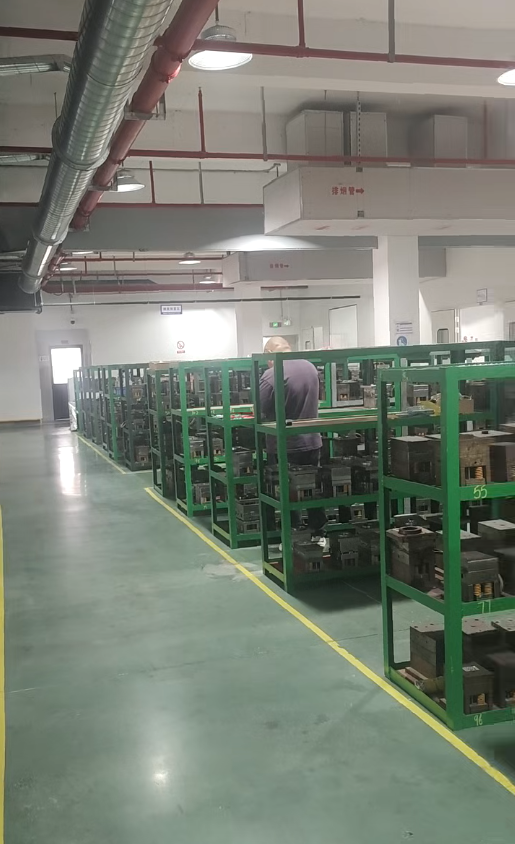
Eyewear mold manufacturing refers to the physical creation of the tool, typically from high-grade, hardened steel or aluminum. The precision required is extraordinary, often reaching tolerances of ±0.005mm or finer, as any imperfection in the mold will be replicated on every single produced part.
The core processes include:
1. CNC Machining: This is the cornerstone of modern mold making. Using the digital design files, computer-controlled milling machines with multiple axes meticulously carve the core and cavity blocks out of solid steel. The complexity of eyewear designs—with undercuts, intricate surface textures, and thin sections—demands state-of-the-art 5-axis CNC machines.
2. Electrical Discharge Machining (EDM): For ultra-fine details, sharp internal corners, or complex geometries that are difficult for milling tools to reach, EDM is used. This process uses electrical sparks to erode the steel into the desired shape with incredible precision.
3. Texturing and Polishing: The mold's surface finish directly translates to the frame's surface. A high-polish cavity will yield a glossy frame, while a textured cavity (created through chemical etching or laser engraving) can produce matte, grained, or patterned finishes. For Acetate eyewear mold production, high-polish surfaces are crucial to achieving the deep, reflective shine associated with premium cellulose acetate.
4. Hardening and Coating: The mold steel undergoes heat treatment to increase its surface hardness, providing resistance to the abrasive wear of thousands of injection cycles. Advanced coatings like Titanium Nitride (TiN) can further enhance durability, corrosion resistance, and release properties.
Part 3: Material-Specific Mastery: Acetate and TR90 Mold Fabrication
While the core principles of mold making are consistent, the specific requirements for different frame materials lead to specialized approaches in Acetate eyewear mold production and TR90 frame mold fabrication.
For Acetate Eyewear Mold Production:
Cellulose acetate is not injected as a pure melt in the same way as thermoplastics. The process often involves pressing pre-made acetate slabs or injecting acetate compound. The molds, therefore, must be exceptionally robust to withstand high pressure.
• Temperature Control: Precise cooling channels are critical. Acetate requires specific thermal management to set properly without internal stresses or warping.
• High-Polish Finishing: As mentioned, the cavity must be mirror-polished to achieve acetate's signature luster. Any microscopic flaw will be visible on the finished frame.
• Durability Focus: Given the pressure and nature of the material, molds for acetate are built for extreme longevity, often from the highest-grade corrosion-resistant steels.
For TR90 Frame Mold Fabrication:
TR90 (Grilamid) is a flexible, lightweight nylon-based thermoplastic injected in a molten state. Its mold requirements are distinct.
• Focus on Flow: TR90's flow characteristics are different from acetate. Mold design prioritizes smooth, laminar flow to fill thin, flexible temple sections without hesitation marks.
• Cooling for Crystallinity: The cooling rate affects the final crystallinity and thus the flexibility and strength of the TR90 part. Mold design incorporates optimized cooling lines to ensure consistent material properties.
• Ejection for Flexible Parts: Ejecting flexible TR90 parts without deformation requires carefully placed and sized ejector pins. The Optical frame mold design must account for the part's tendency to bend or stick.
Part 4: Enabling Brand Identity: Custom Eyewear Mold Development
For brands seeking differentiation, Custom eyewear mold development is the gateway to unique intellectual property. This is a collaborative, iterative journey between the brand's designers and the mold engineering team.
The process involves:
• Concept Feasibility: Assessing whether a daring design can be successfully molded, considering wall thickness uniformity, draft angles for undercuts, and the feasibility of creating the required mold actions (like sliders or lifters for complex geometries).
• Prototype and Test: A single-cavity prototype mold is often developed first. This allows for testing the design, fit, and material performance with a lower initial investment before committing to a full, multi-cavity production mold.
• Multi-Cavity Production Molds: Upon final approval, the production mold is fabricated. A single mold may contain 2, 4, 8, or more cavities (impressions of the frame part), dramatically increasing output. The precision in creating identical cavities is paramount for consistency in high-volume Eyewear mold manufacturing.
Part 5: The Convergence: From Mold to Finished Frame
The completed mold is installed in an injection molding press. For acetate or TR90, the material is heated, injected into the cavity under high pressure, cooled, and ejected as a raw frame component—a front or temple. This is where the investment in world-class Optical frame mold design and Eyewear mold manufacturing pays dividends, yielding parts that require minimal post-processing.
The components then enter finishing: tumbling, polishing, hinge installation, and assembly. The initial accuracy afforded by a superior mold reduces waste, improves assembly efficiency, and ensures the final product aligns perfectly with the brand's vision, whether it emerged from specialized Acetate eyewear mold production or agile TR90 frame mold fabrication.
Conclusion: The Mold as a Strategic Asset
Ultimately, the mold is not just a tool; it is a capital-intensive, precision-crafted asset that encapsulates a brand's design DNA. The processes of Eyewear mold manufacturing, grounded in expert Optical frame mold design, are the critical enablers of both aesthetic innovation and manufacturing scalability. Whether facilitating the classic elegance of Acetate eyewear mold production or the high-tech performance of TR90 frame mold fabrication, the mold dictates quality from the very first shot.
Investing in sophisticated Custom eyewear mold development is, therefore, a strategic decision. It protects proprietary designs, ensures long-term production consistency, and provides the foundational capability to respond to market trends with speed and quality. In the anatomy of an eyewear business, the mold room is the beating heart, and its output—the perfect, repeatable component—is the lifeblood of the industry.