

The eyewear industry stands at a fascinating crossroads of timeless craftsmanship and cutting-edge industrial innovation. While the appeal of a beautifully hand-finished frame endures, the demands of global scale, impeccable precision, and complex customization are driving a profound transformation. This shift is embodied by the rapid integration of automation and robotics across the entire production chain. From initial block to final boxing, processes like Automated eyewear frame production, Optical lens automated assembly, Eyewear robotic manufacturing, Automated spectacle component processing, and Eyewear CNC machining automation are redefining what is possible in terms of quality, efficiency, and design freedom. This article explores this technological revolution, detailing how automation is reshaping the creation of the world's glasses.
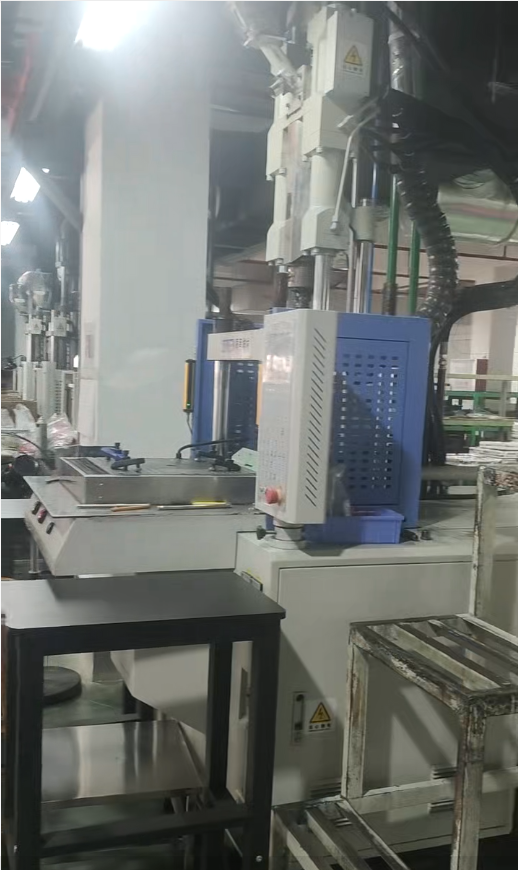
Part 1: The Digital Foundry: CAD, CAM, and the Automation Pipeline
The journey of an automated pair of eyewear begins not on the factory floor, but in the digital realm. Computer-Aided Design (CAD) software allows designers to create intricate frame geometries that would be exceedingly difficult or economically unviable to produce manually. This digital model is the single source of truth for all subsequent automated processes.
The critical link is Computer-Aided Manufacturing (CAM) software, which translates the 3D CAD model into machine-readable code (G-code). This code provides the precise instructions for Eyewear CNC machining automation, dictating every cut, drill, and contour. This seamless CAD/CAM integration is the cornerstone of modern Automated spectacle component processing, ensuring that the designer’s vision is replicated with micron-level accuracy, consistently, across thousands of units. It enables the creation of "digital twins" of components, allowing for virtual testing and optimization before any physical material is used.
Part 2: Sculpting the Form: Automated Eyewear Frame Production
Automated eyewear frame production encompasses the primary shaping of frame components from raw materials. For acetate and plastic frames, this centers on highly advanced CNC milling.
• CNC Machining of Acetate: The process begins with blocks or sheets of cellulose acetate. These are mounted onto pallets that are automatically fed into multi-axis CNC milling centers. Under Eyewear CNC machining automation, these machines, equipped with a library of specialized cutting tools, follow the CAM program to sculpt the front rims, temples, and nose bridges from the solid block. This "subtractive manufacturing" process achieves complex surface textures, undercuts, and intricate patterns directly from the digital file, eliminating the need for manual tracing and rough shaping.
• Metal Frame Processing: For metal frames, automation takes several forms. Precision metal injection molding (MIM) creates near-net-shape components like hinges and end pieces. Laser cutting systems automatically slice precise temple and front wire shapes from sheets of titanium or stainless-steel alloy. These components then proceed to automated bending machines that form the wires into exact curves and angles based on digital templates. Automated spectacle component processing for metals also includes robotic welding stations, where laser welders join bridge and end-piece components with superhuman consistency and strength, free from the variances of manual soldering.
This stage transforms raw material into identifiable, high-tolerance parts, ready for the crucial finishing and assembly phases.
Part 3: The Robotic Touch: Finishing, Polishing, and Handling
One of the most labor-intensive areas in traditional manufacturing is finishing. This is where Eyewear robotic manufacturing makes a dramatic impact.
• Robotic Polishing and Tumbling: After machining, components have visible tool marks and rough edges. Robotic arms, fitted with adaptive polishing heads, are now deployed. Programmed with 3D paths of the component, they apply consistent pressure and motion to polish every contour of a frame front or temple. For bulk finishing, automated tumbling lines with sequenced barrels and media perform deburring, pre-polishing, and matte finishing without manual loading or unloading between stages.
• Automated Quality Inspection: Computer vision systems integrated into the production line perform real-time Automated spectacle component processing checks. Cameras scan each component, comparing its dimensions and surface quality against the digital twin. Defects like cracks, pits, or milling errors are automatically flagged, and the part is rejected without human intervention.
• Material Handling: Autonomous Guided Vehicles (AGVs) or conveyor systems integrated with robotic pick-and-place units move components between machining, polishing, cleaning, and assembly stations. This minimizes handling damage, accelerates workflow, and creates a truly continuous production line.
Part 4: The Core of Clarity: Optical Lens Automated Assembly
While frames are being crafted, a parallel and equally advanced process is underway for lenses. Optical lens automated assembly refers to the highly precise, software-driven journey from a blank lens disc to a mounted, finished product.
• Digital Surfacing and Free-Form Generation: This is the pinnacle of lens automation. A lens blank is loaded into a generator. Using the patient’s precise prescription and frame data (from the digitally measured frame shape), the machine's computer calculates a unique, complex surface. Diamond cutting tools then sculpt this personalized geometry onto the lens with accuracies far beyond traditional grinding. This is a fully automated, lights-out process.
• Automated Edging and Grooving: The surfaced lens proceeds to an edger. An automated arm picks the lens, and the machine scans the frame or a digital template. It precisely calculates the optimal lens placement to align the optical center with the wearer’s pupillary distance, then grinds the lens perimeter to the exact shape. For semi-rimless or rimless styles, it also cuts the necessary groove or drills mounting holes—all without operator touch.
• Coating and Curing: Lenses travel through automated conveyorized coating chambers where layers of anti-reflective, scratch-resistant, and hydrophobic coatings are applied in vacuum environments. Automated UV curing stations then instantly harden these coatings.
Part 5: The Final Convergence: Robotic Assembly and Final QC
The culmination of Automated eyewear frame production and Optical lens automated assembly is their marriage in final assembly—a stage ripe for Eyewear robotic manufacturing.
• Lens Insertion: For acetate frames, robotic cells can heat the frame rim, pick and orient the lens, and insert it with consistent, even pressure to avoid stress cracks. For metal and rimless frames, robots can apply screws to hinges and lens mounts with calibrated torque.
• Hinge and Temple Assembly: Automated screwdriving systems install hinge screws, consistently applying the perfect torque to ensure smooth, durable action. Robotic arms can then attach temples and perform initial folding tests.
• Final Verification: The assembled eyewear undergoes a final automated inspection. Lensometers automatically verify the prescription in the mounted lenses. A robotic arm places the glasses on a high-resolution 3D scanner that compares the entire assembly—frame dimensions, lens alignment, temple angle—against the original CAD model, ensuring every specification is met.
Benefits and the Human-Machine Synergy
The advantages of this automated ecosystem are profound:
• Unmatched Precision and Consistency: Eyewear CNC machining automation and robotic processes eliminate human variance, ensuring every pair in a batch is geometrically identical.
• Scalability and Speed: Automated lines can run 24/7, dramatically increasing output and reducing lead times to meet global demand.
• Complexity and Customization: Automation makes economically feasible the production of highly complex, lightweight designs and truly personalized prescription lenses (Free-Form) that were previously artisanal luxuries.
• Waste Reduction: Digital optimization of cutting paths and precise machining minimizes material waste, especially valuable with premium acetates and metals.
• Data-Driven Improvement: Every machine generates data on tool wear, cycle times, and defect rates, enabling predictive maintenance and continuous process optimization.
Crucially, automation does not eliminate the human role; it elevates it. Skilled technicians and engineers are needed to program, maintain, and supervise these systems. Artisans focus on final quality checks, delicate hand-polishing for ultra-luxury segments, and design innovation. The factory floor becomes a cleaner, safer, and more technical environment.
Conclusion: The Clear Future of Eyewear Making
The integration of Automated eyewear frame production, Optical lens automated assembly, and comprehensive Eyewear robotic manufacturing represents the industry's future. It is a synthesis of digital design intelligence and physical manufacturing prowess. Through Automated spectacle component processing and sophisticated Eyewear CNC machining automation, companies can achieve a once-impossible triad: superior quality, scalable production, and expansive design freedom.
This technological shift ensures that the eyewear industry can meet the modern world's expectations—delivering highly personalized, perfectly precise, and robust visual aids and fashion items to a global market. In the automated factory, the meticulous eye of the camera and the unwavering arm of the robot work in concert to bring clarity to vision, proving that the future of eyewear is not just seen but is built with intelligent precision.