

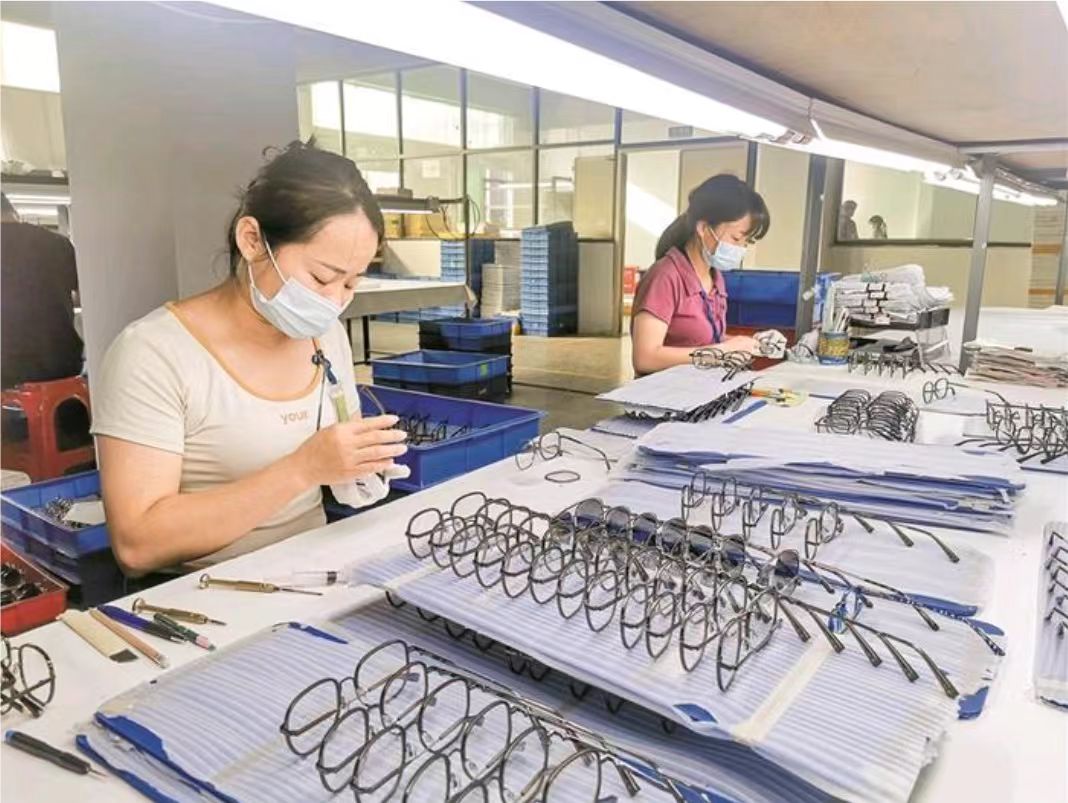
In the highly competitive world of eyewear manufacturing, the distinction between mass-produced commodity frames and premium craftsmanship often comes down to the human touch. While automated production lines dominate high-volume manufacturing, there remains an irreplaceable role for skilled artisans who bring precision, care, and attention to detail to every pair of spectacles. At the heart of this artisanal approach lies the semi-finished eyewear assembly workshop—a specialized environment where partially completed frames undergo final shaping, fitting, and finishing through meticulous hand operations. This article explores the critical processes that occur within such workshops, focusing on manual hinge installation, OEM hand assembly eyewear, manual frame assembly, and factory semi-frame processing. We will examine how these manual techniques complement modern machinery, why they remain essential for high-quality eyewear, and how brands can leverage these capabilities to differentiate their products in a crowded marketplace.
The global eyewear market is projected to exceed $200 billion by 2028, with increasing consumer demand for unique, durable, and comfortable frames. Semi-finished eyewear assembly workshop operations play a pivotal role in meeting this demand by offering flexibility, customization, and superior quality control that fully automated lines cannot achieve. From luxury brands to niche independent labels, manufacturers rely on the expertise found in these workshops to transform raw components into finished eyewear that delights customers. Understanding the workflows, skills, and technologies involved in semi-finished eyewear assembly workshop environments is essential for anyone involved in sourcing, designing, or selling optical products.
07-02/2026